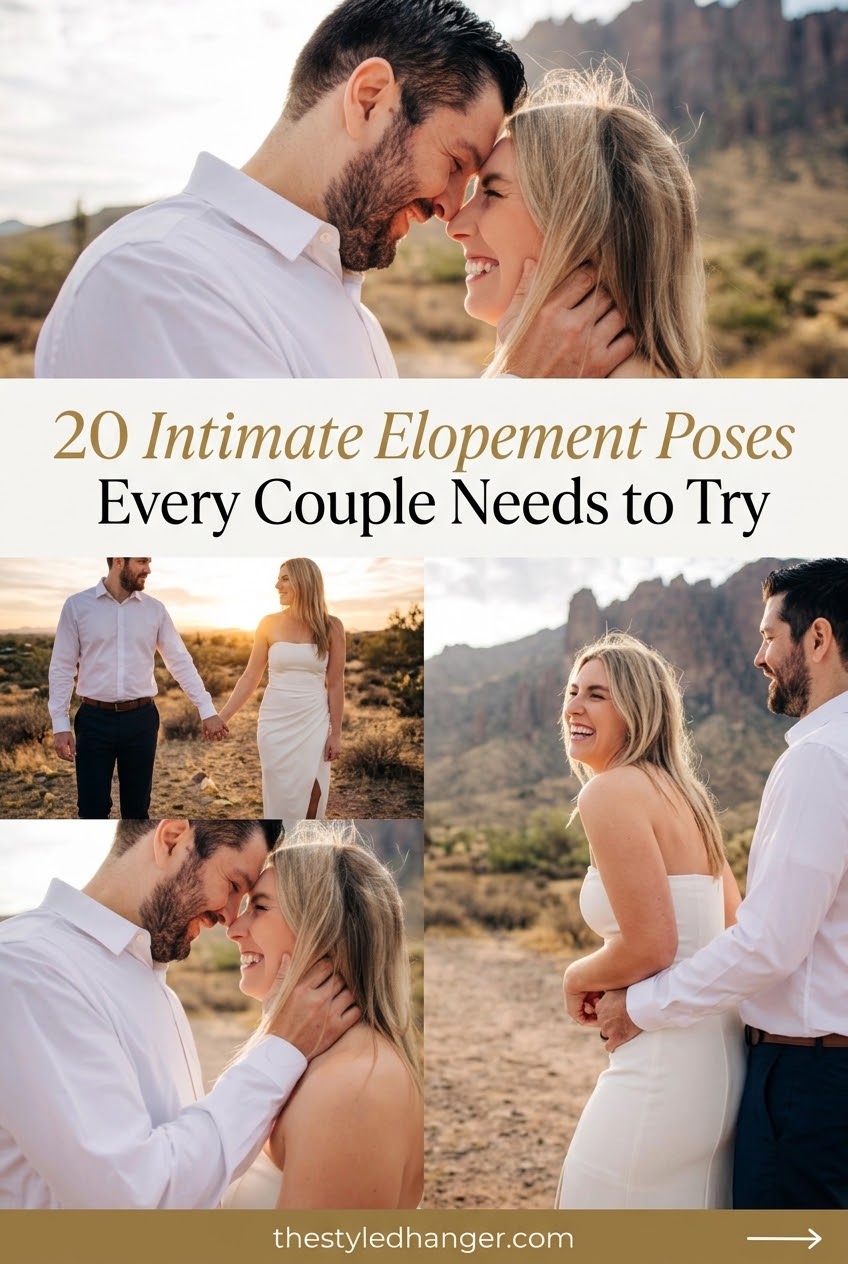
Elopement photography is less about staged perfection and more about preserving the movement, emotion, and connection of a day built around two people. This curated collection explores twenty distinct pose ideas, each offering a different way to tell an intimate wedding story.
Walking into the landscape together
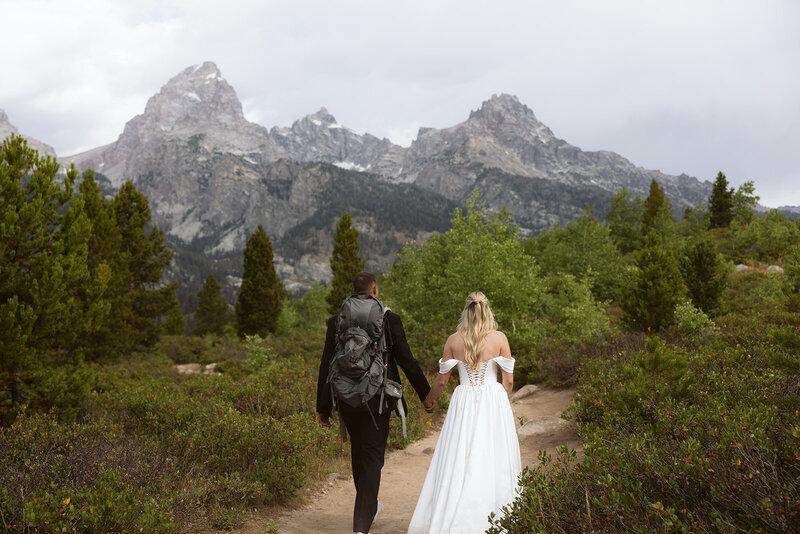
The adventure walk pose creates a feeling of beginning a shared journey. It works especially well for couples who want their elopement images to feel natural rather than formal.
Ask the couple to walk slowly, hold hands, and interact instead of staring at the camera. The movement creates genuine expressions and suits outdoor ceremonies beautifully.
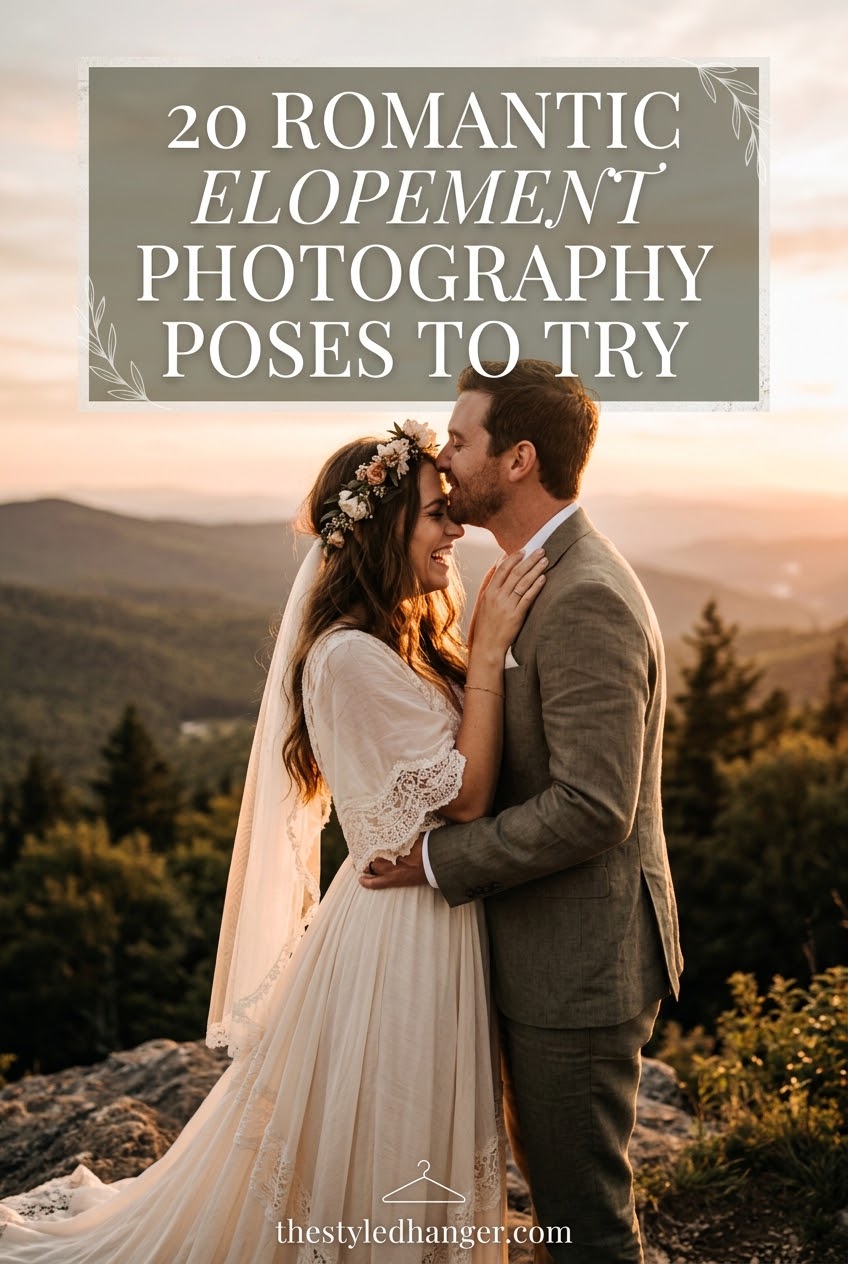
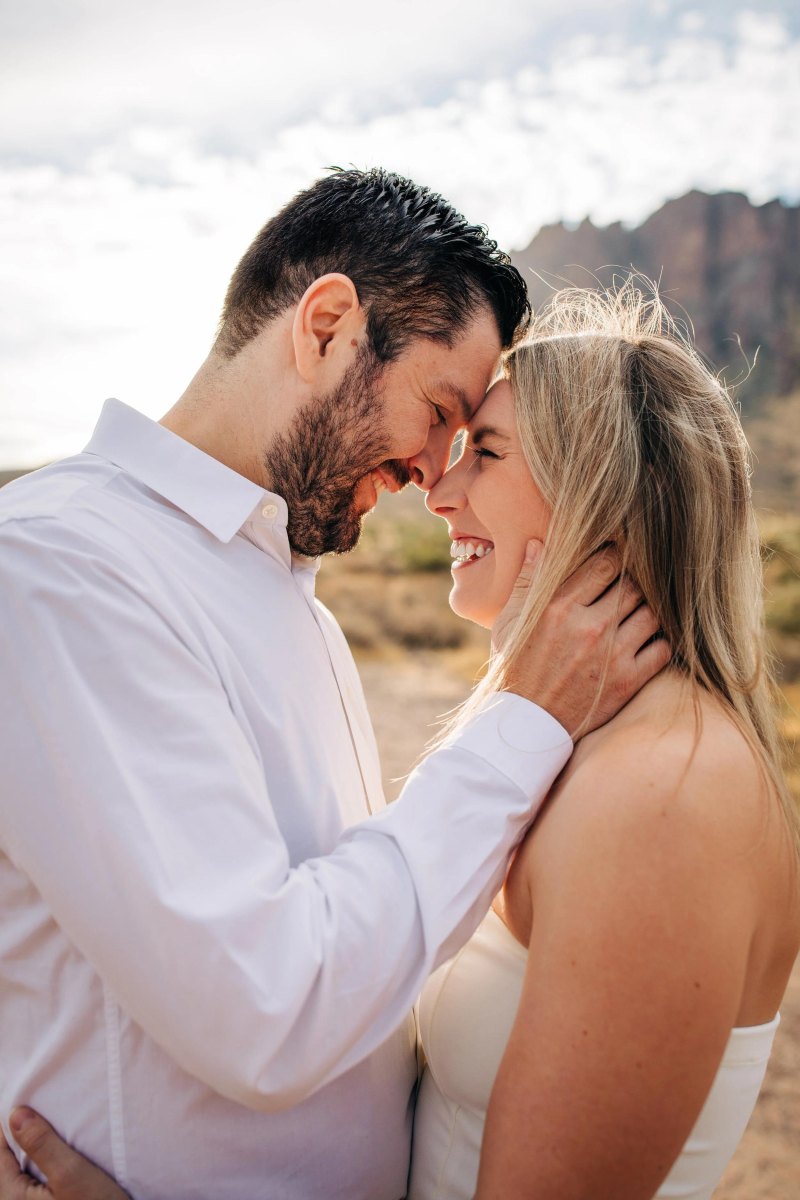
The forehead kiss embrace
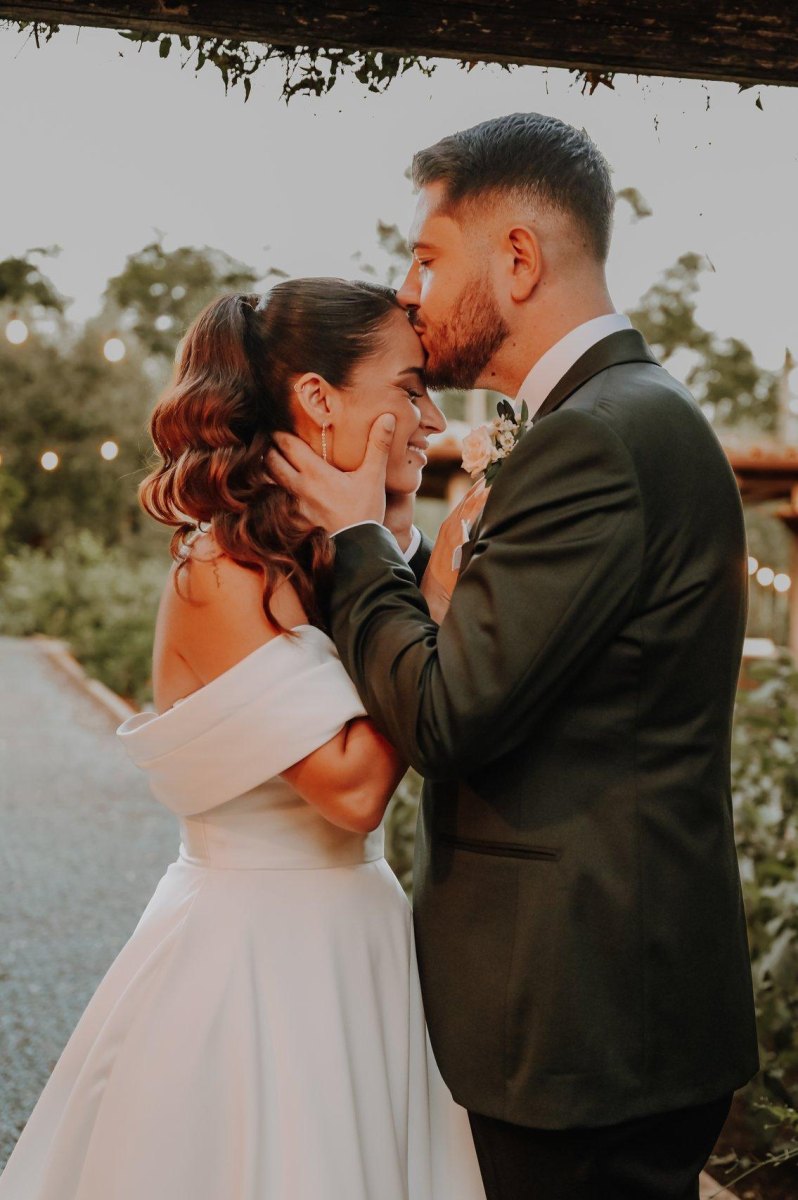
The quiet forehead kiss is a timeless elopement photography pose built around tenderness. It highlights closeness without requiring a dramatic gesture.
Photographers can adapt it by changing hand placement, turning bodies slightly, or adding a soft laugh between poses for a more personal result.
The veil movement moment
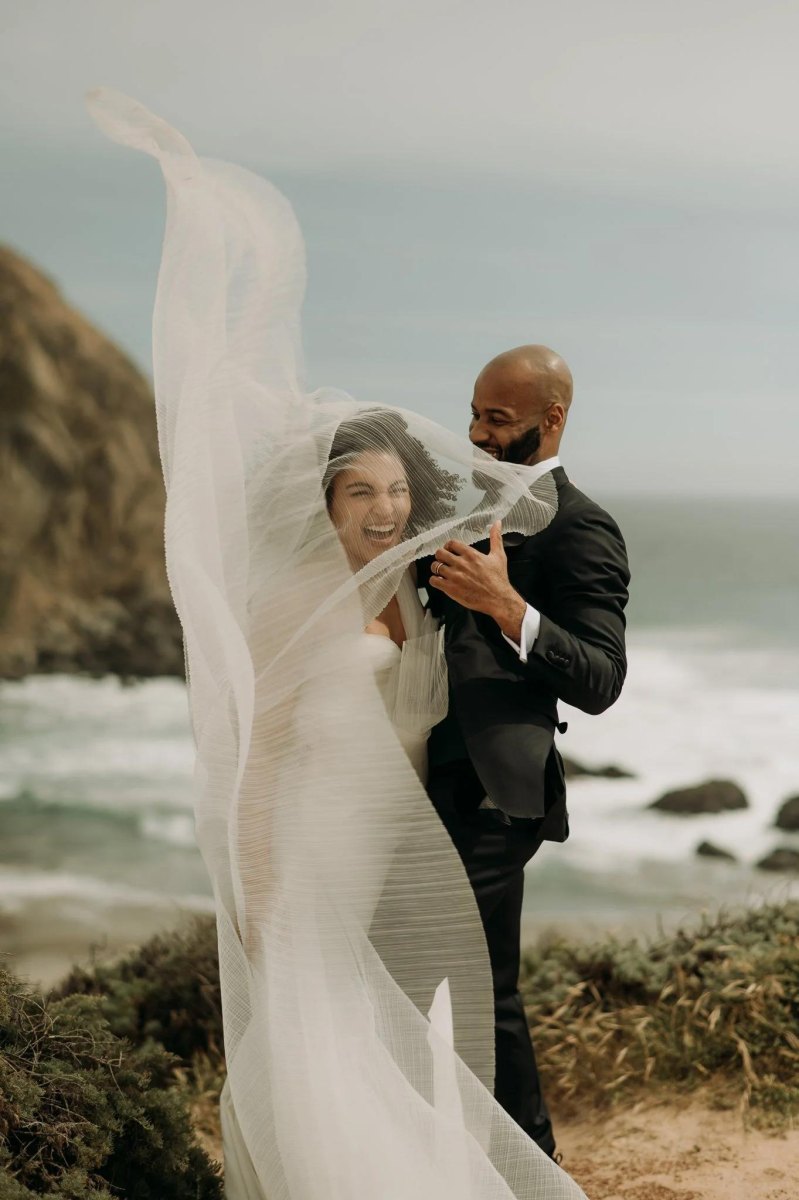
The flowing veil pose adds romance and motion to a coastal or outdoor elopement. The couple can hold the veil together or let the wind create the shape.
This works best with lightweight fabrics that move easily and complements minimalist wedding styling.
The playful piggyback pose
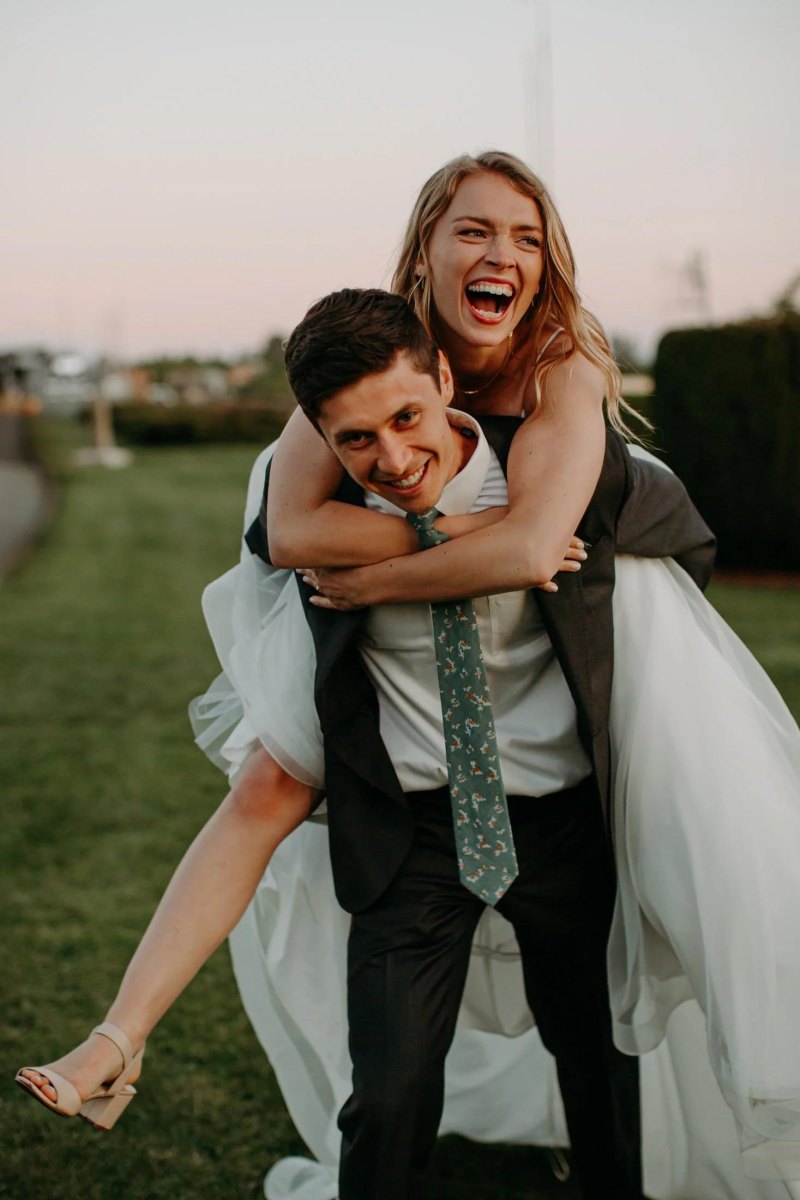
The playful lift brings personality into elopement photography. It is ideal for couples who want images that feel energetic and unscripted.
Keep safety first, choose stable ground, and encourage laughter rather than holding a perfect position.
The ceremony promise pose
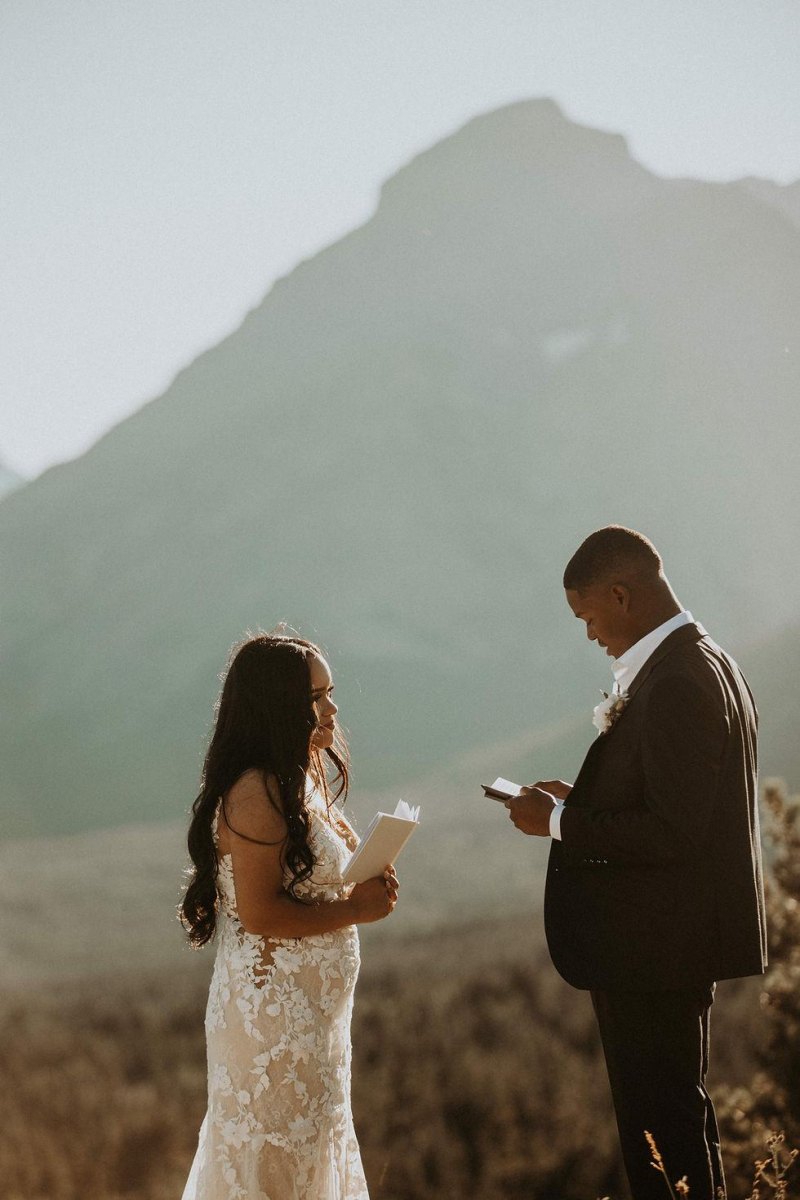
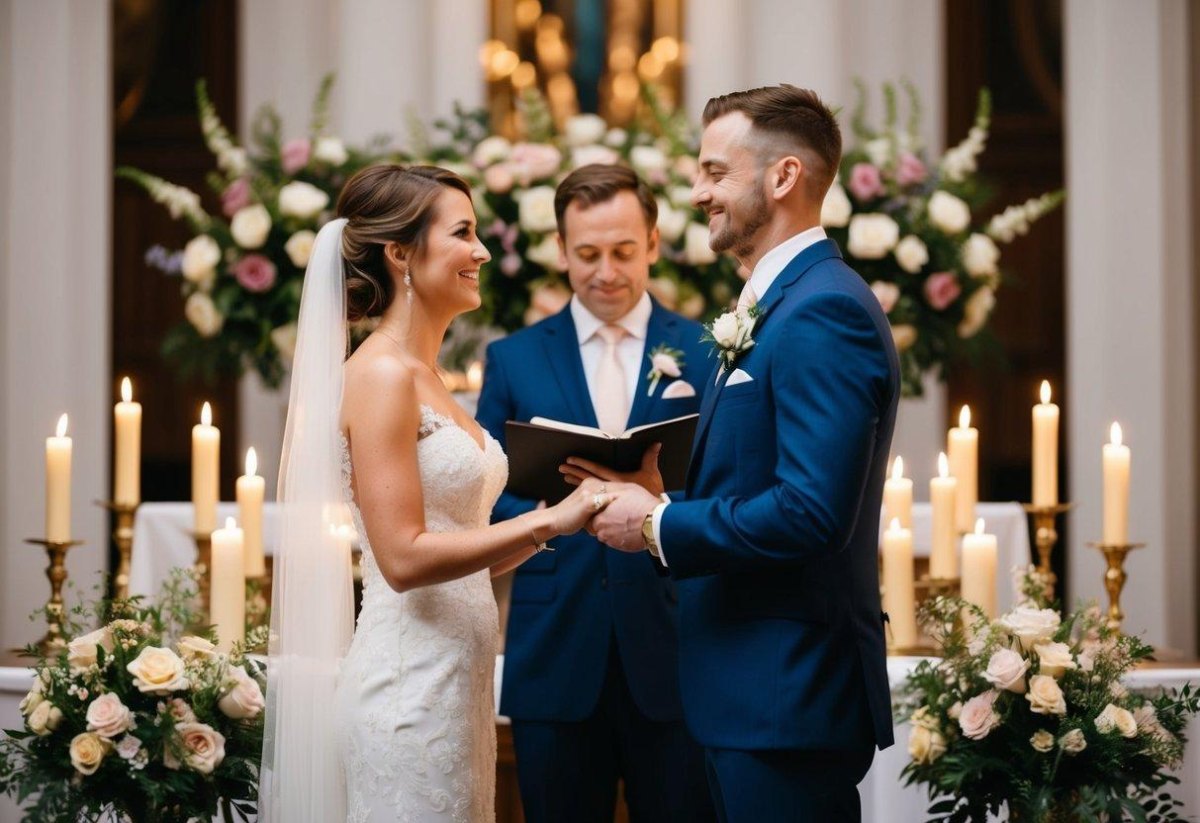
The vow exchange pose focuses on emotional connection. Facing each other with written promises creates a deeply personal portrait.
Simple gestures such as holding letters or hands can make the image feel connected to the actual ceremony.
The gentle dance pose
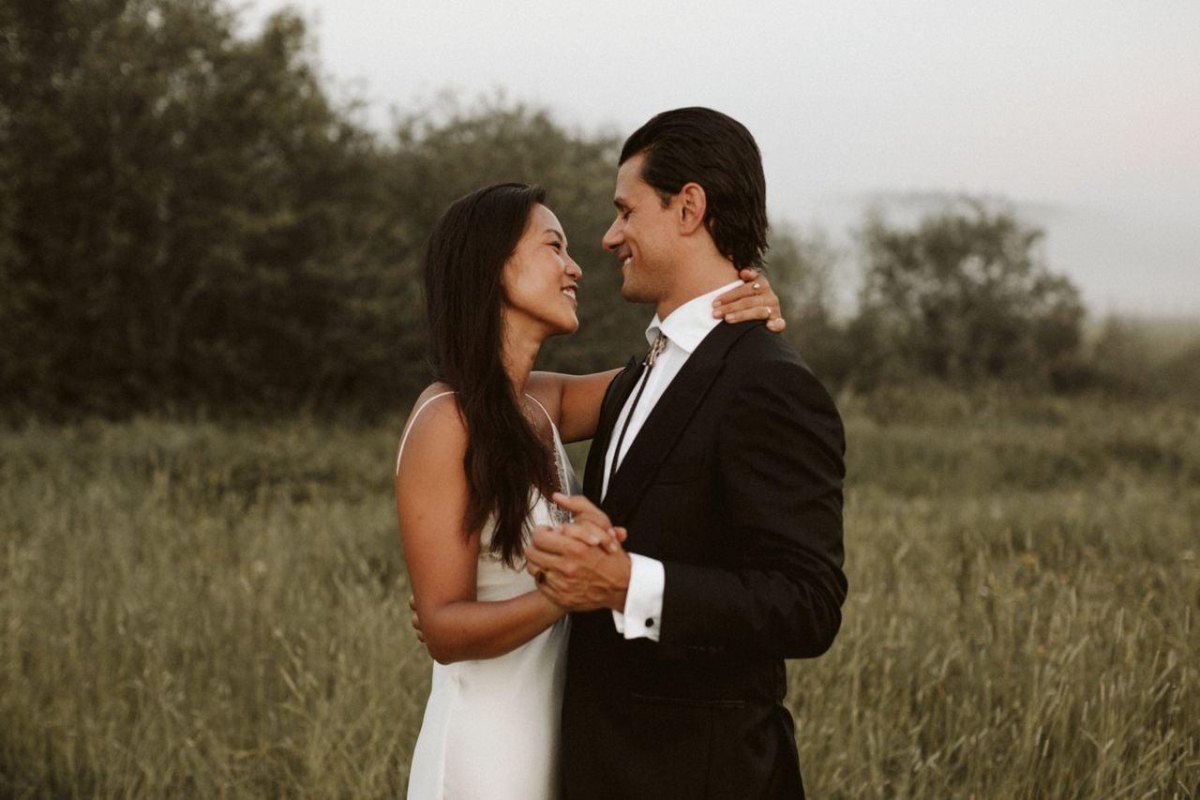
The slow dance transforms an open space into an intimate setting. It works for couples who prefer movement over traditional standing portraits.
A small sway, a shared smile, and relaxed posture are enough to create a romantic frame.
The mountain overlook portrait
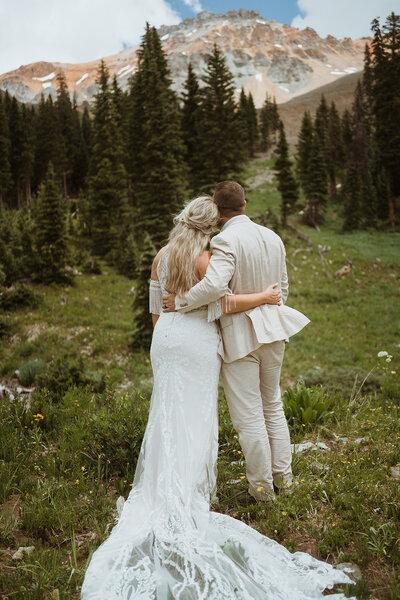
The scenic overlook pose lets the environment become part of the story. Couples stand close while the landscape adds scale and adventure.
Keep the pose simple so the connection remains the focus.
The bridal portrait by the sea
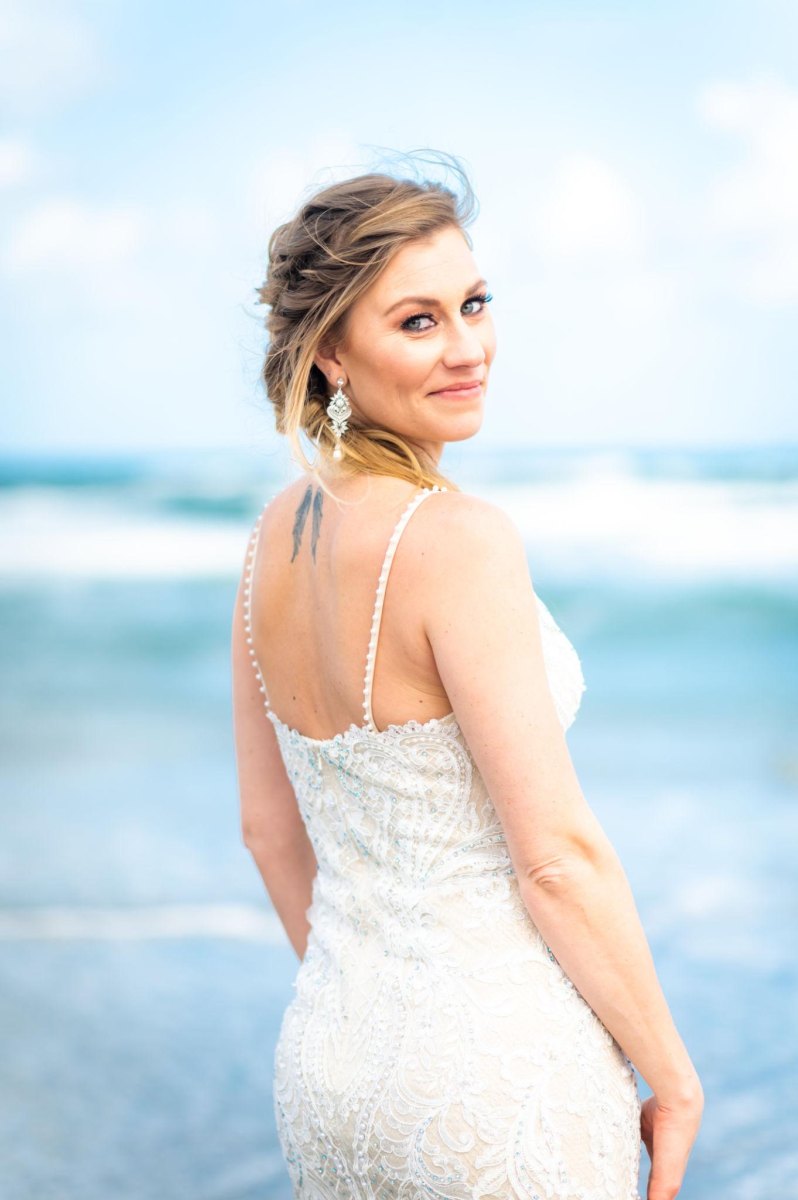
The solo bride reflection pose gives space for personal style. It highlights the dress, accessories, and emotion before or after the ceremony.
This approach suits couples wanting a balanced gallery with both individual and shared moments.
The ring detail embrace
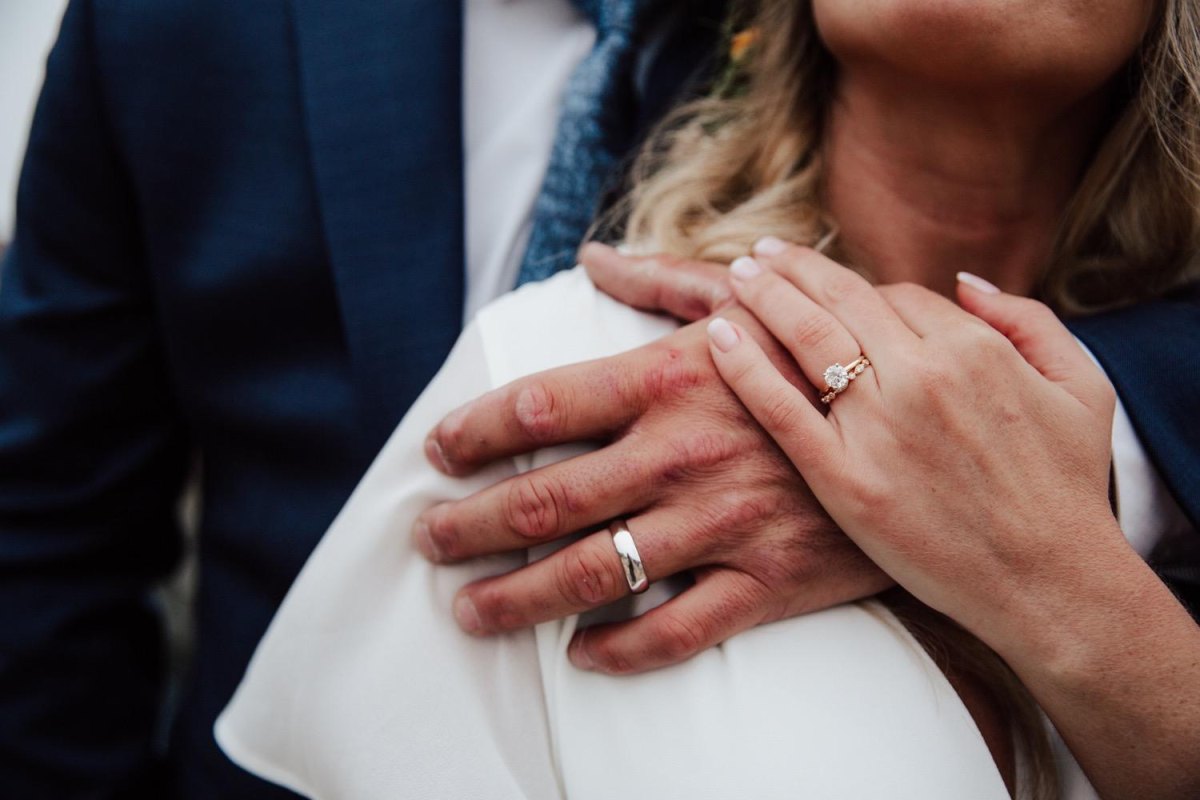
The close detail pose captures symbolic elements such as rings and hands. It adds variety between wider portraits.
Natural hand placement and a relaxed embrace keep the image authentic rather than overly arranged.
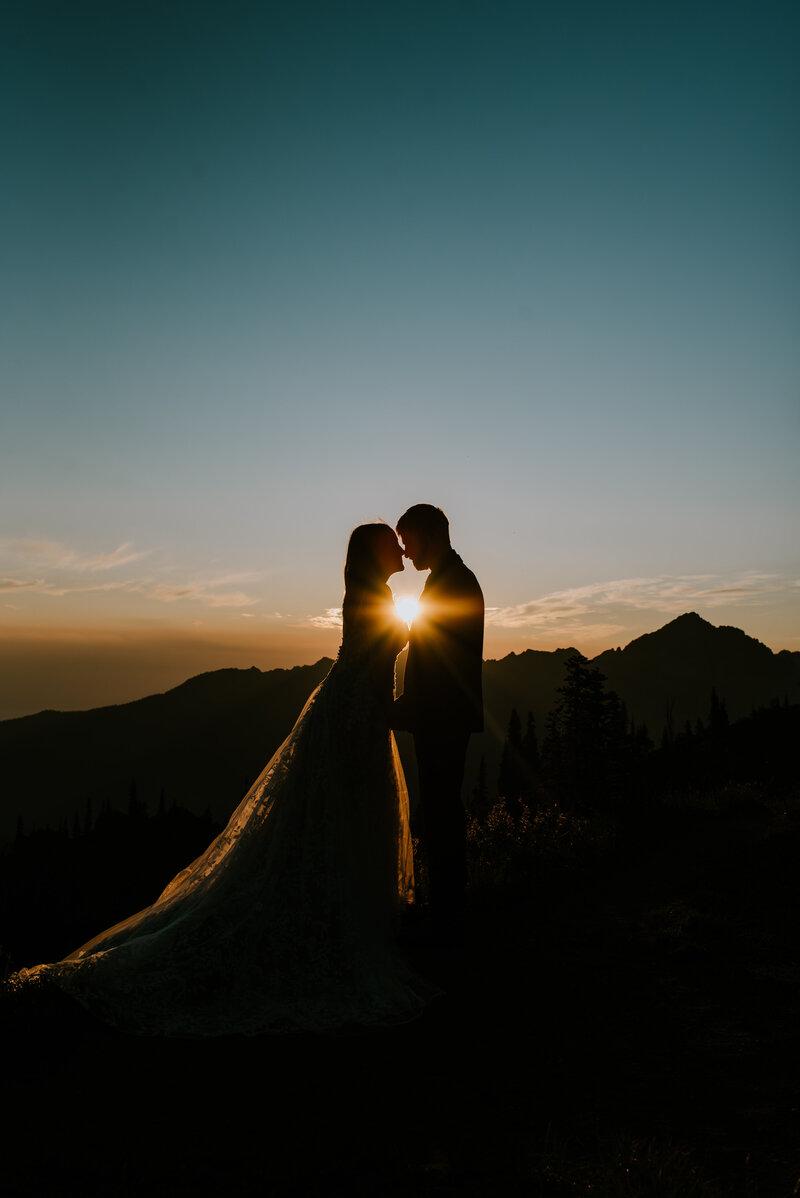
The dramatic cliff silhouette
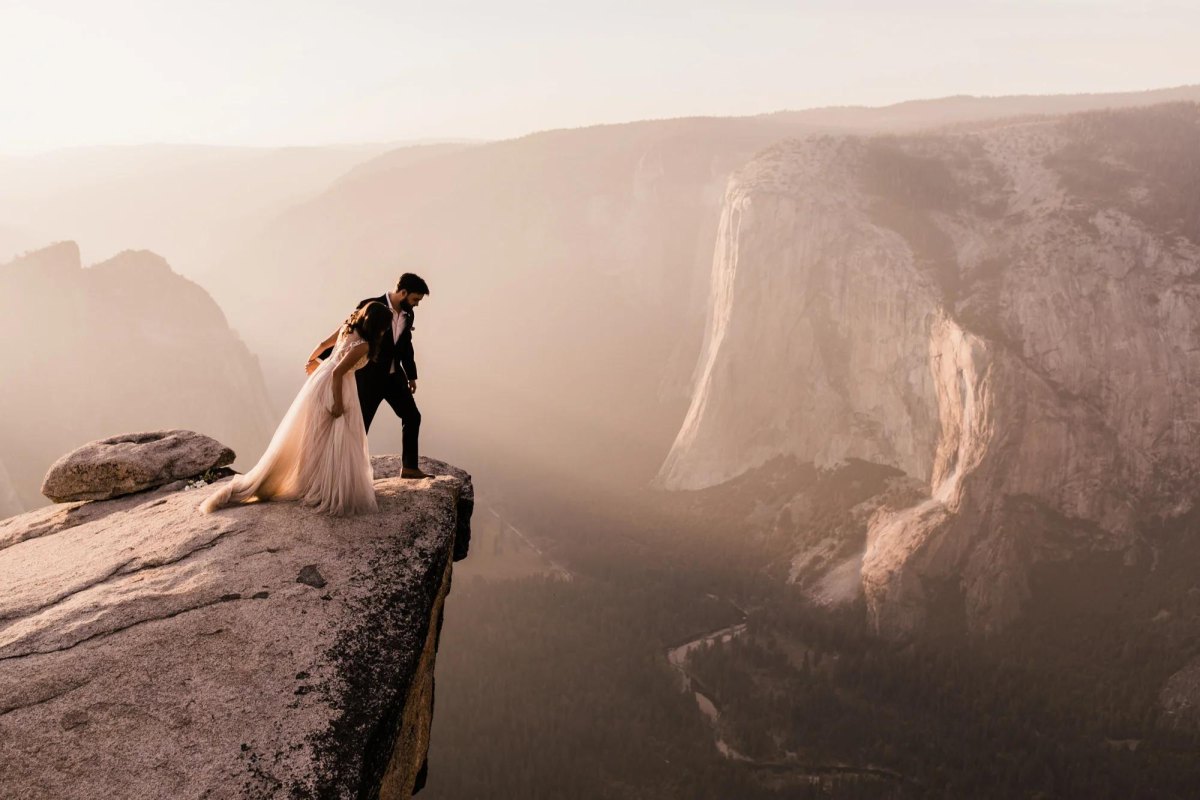
The silhouette pose creates a cinematic feeling through shape and atmosphere. It works beautifully at sunrise or sunset locations.
Couples should focus on each other while the photographer uses distance and composition to emphasize the moment.
The sunset walk away
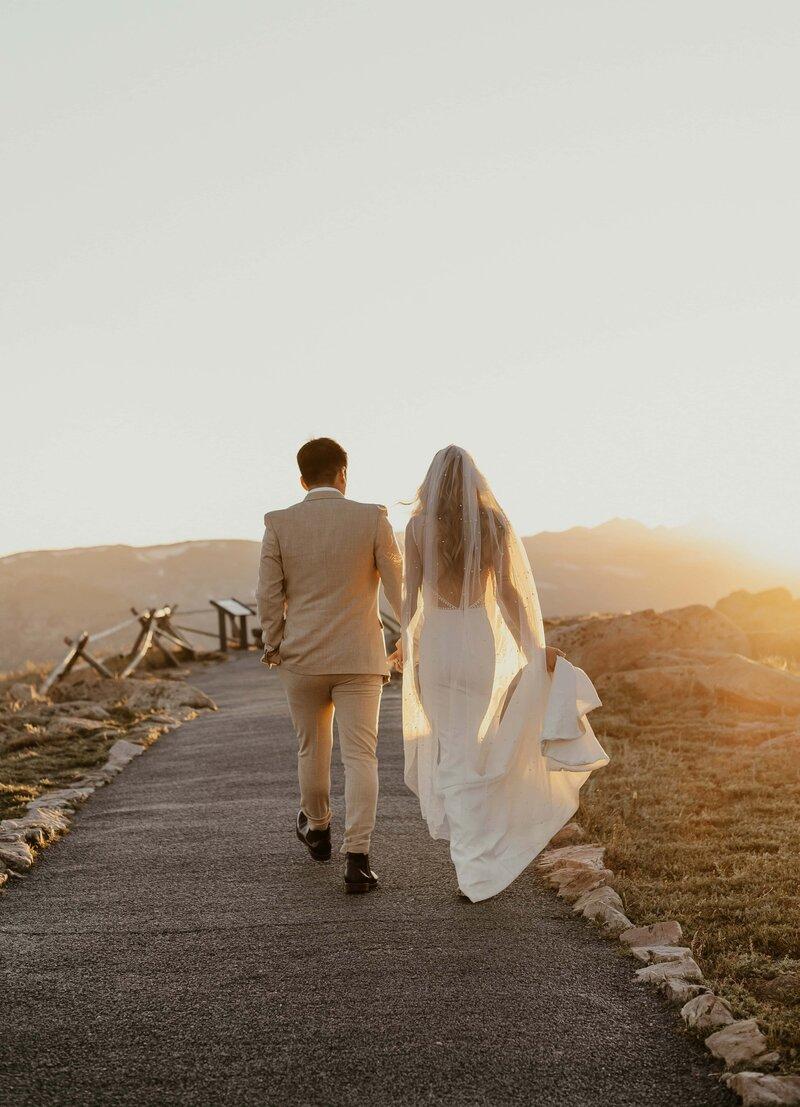
The walking-away pose represents moving forward together. It feels spontaneous and allows clothing details to become part of the story.
Slow steps and natural interaction usually create the strongest results.
The close ocean kiss
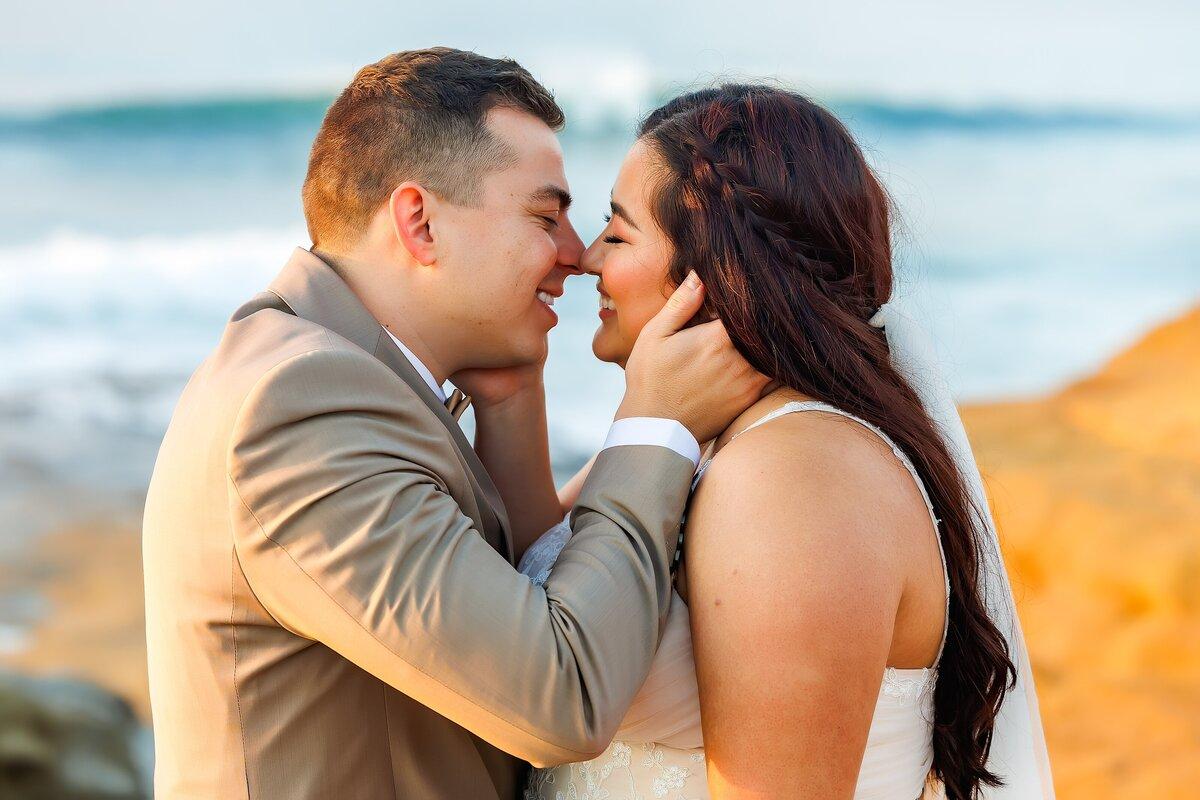
The intimate kiss portrait celebrates affection in a simple way. It works especially well when couples prefer emotional images over formal poses.
Relaxed shoulders and natural touch make the pose feel genuine.
The garden bench moment
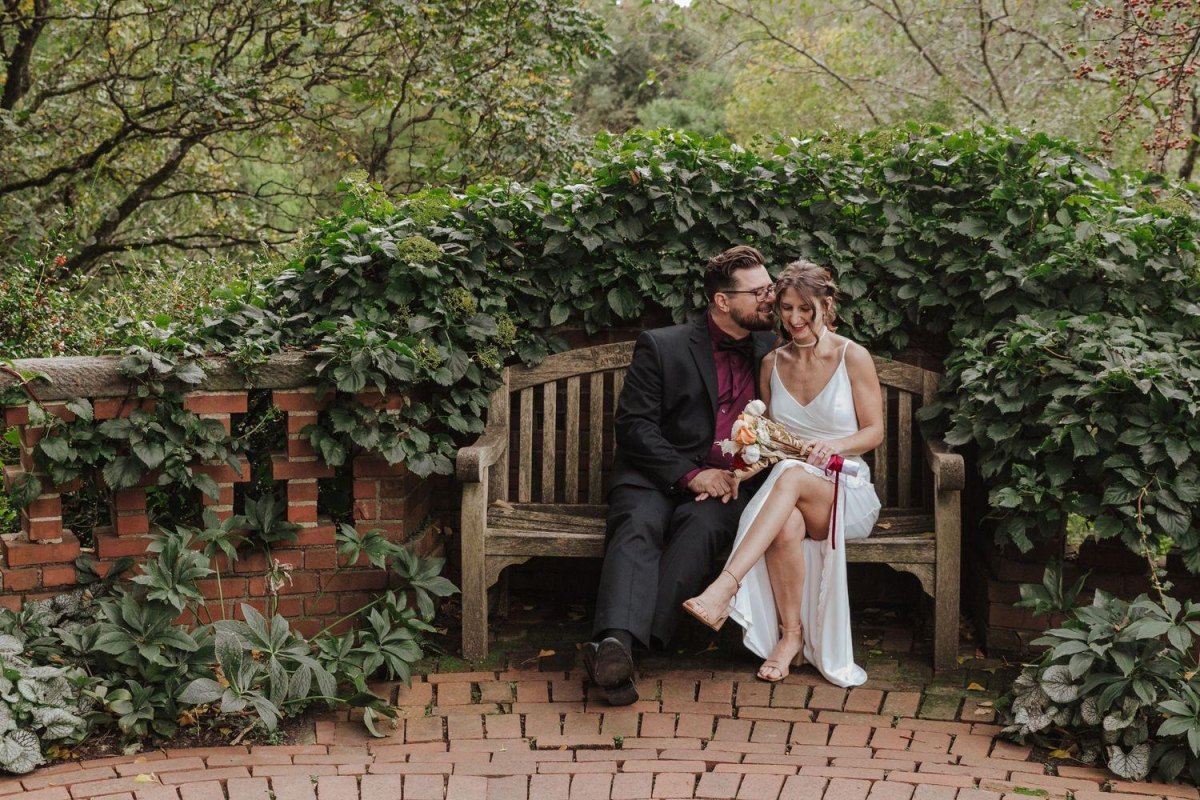
The seated couple pose creates a calm, conversational feeling. A bench or natural seat encourages relaxed body language.
This style is adaptable for garden ceremonies, historic spaces, or private venues.
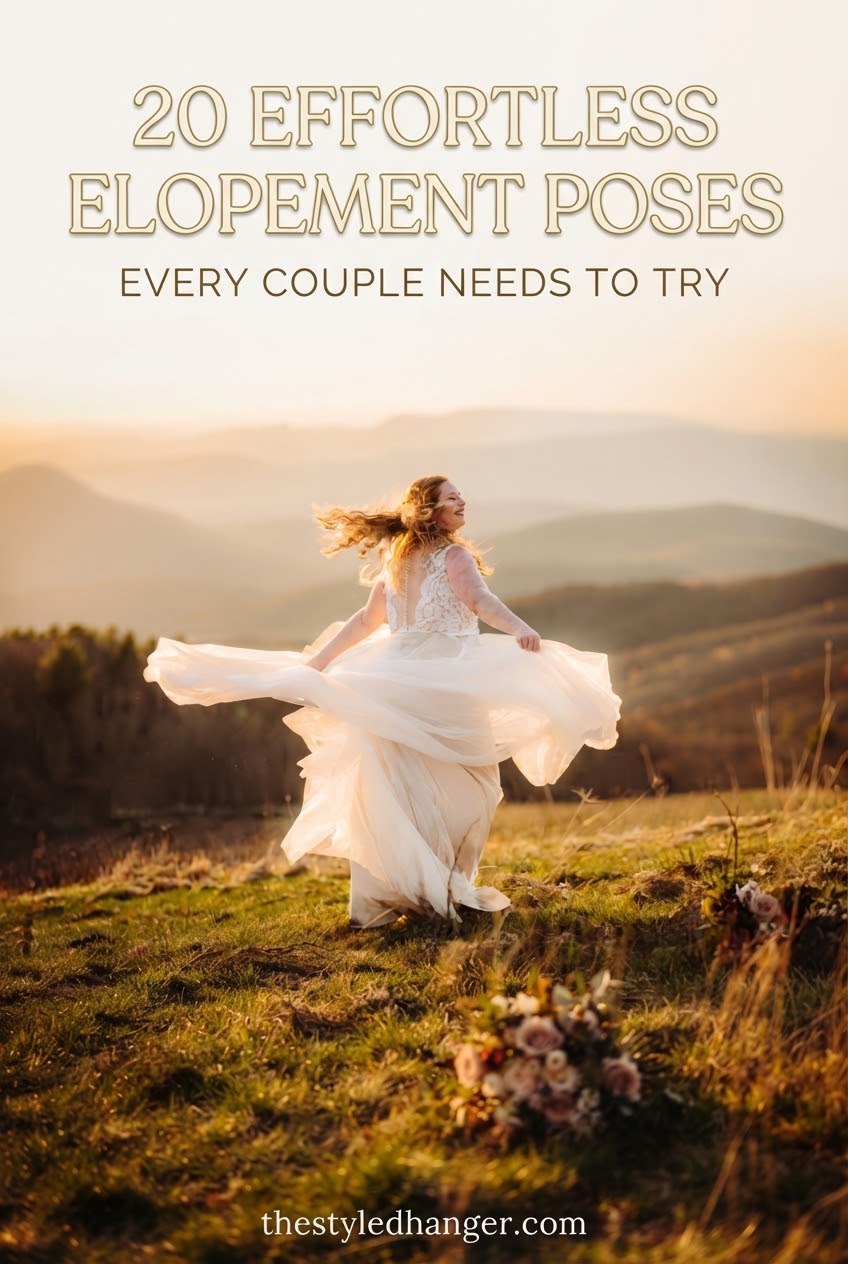
The spinning dress pose
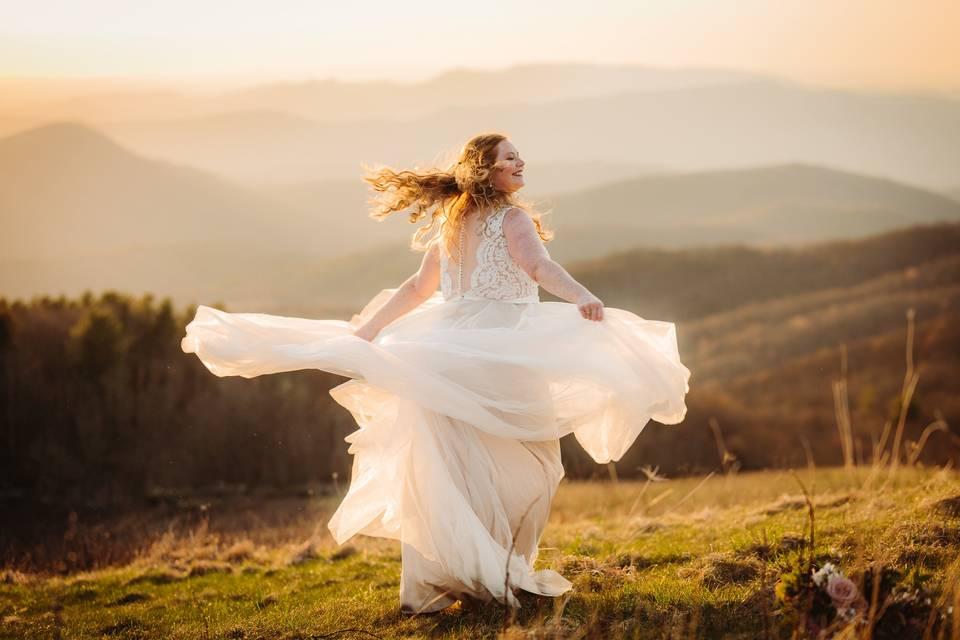
The dress movement pose adds joy and motion. Brides with flowing skirts can create dramatic shapes with a simple turn.
It works best when the couple focuses on enjoying the moment rather than performing.
The mountain celebration pose
The victory pose captures excitement after the ceremony. Raised arms, laughter, and a bold landscape create an adventurous mood.
It is perfect for couples who want their elopement gallery to feel celebratory.
The getting ready connection
The preparation pose documents the quiet moments before the ceremony. Helping with clothing creates intimacy without forcing emotion.
These images often become some of the most meaningful parts of an elopement collection.
The classic coastal escape
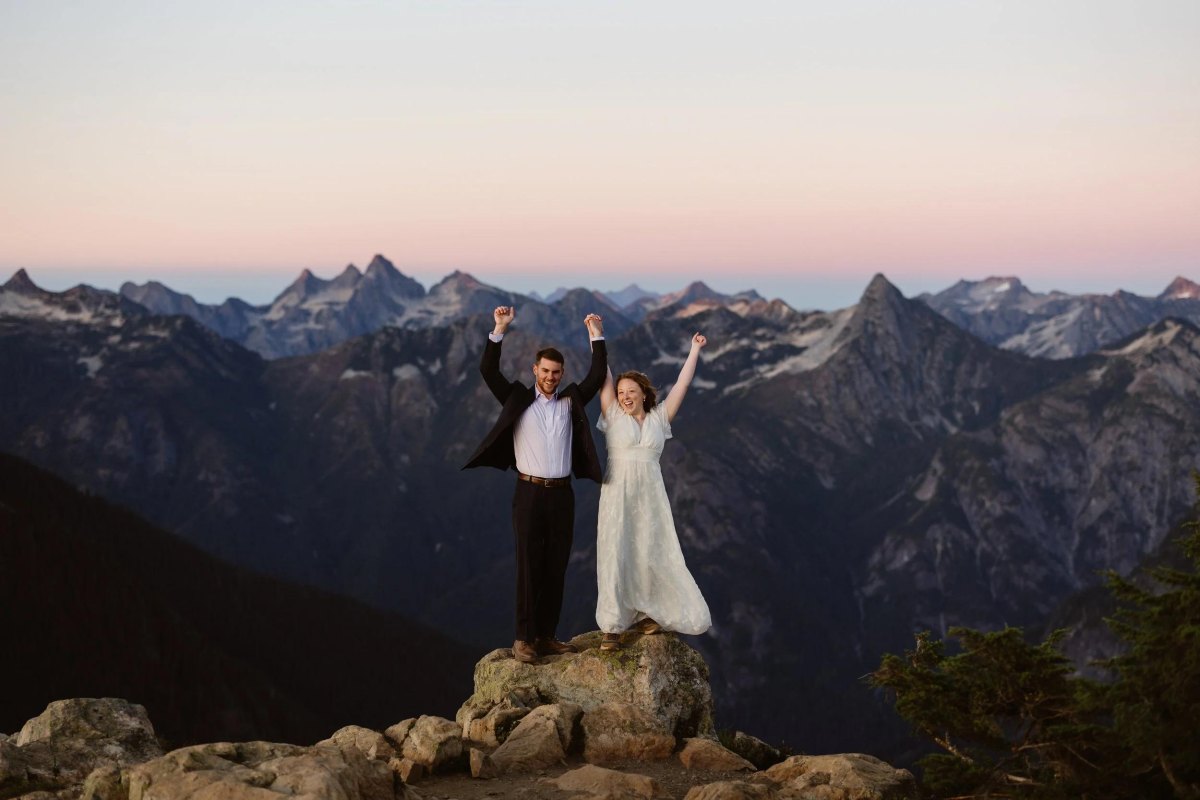
The getaway pose combines romance with a sense of travel. A vehicle, road, or scenic route can symbolize the couple’s next chapter.
Keep styling simple so the couple remains the central focus.
The affectionate close-up
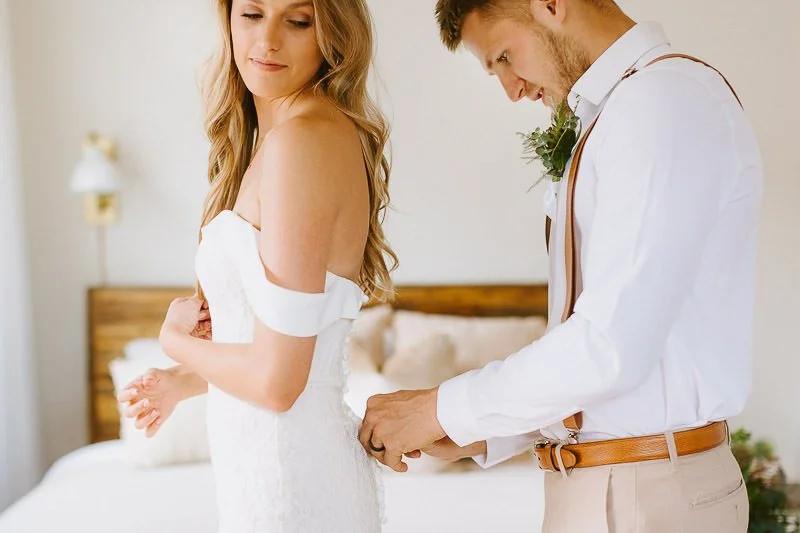
The face-to-face embrace is designed around emotion. Close positioning allows expressions and connection to lead the image.
This pose works across many locations because it depends more on chemistry than scenery.
The mountain celebration stance
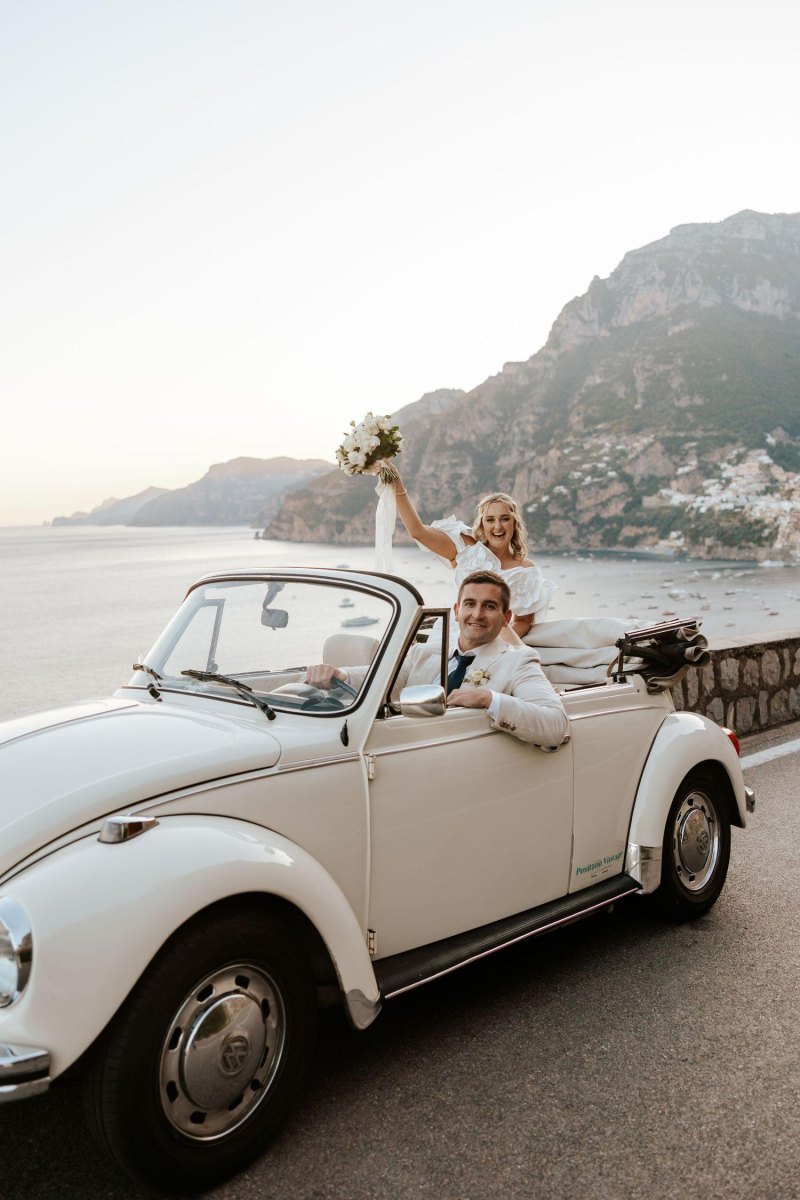
The wide adventure portrait highlights the scale of an outdoor elopement. Couples can stand together with confident posture and relaxed smiles.
It is especially effective for couples who value dramatic surroundings.
The quiet beginning together
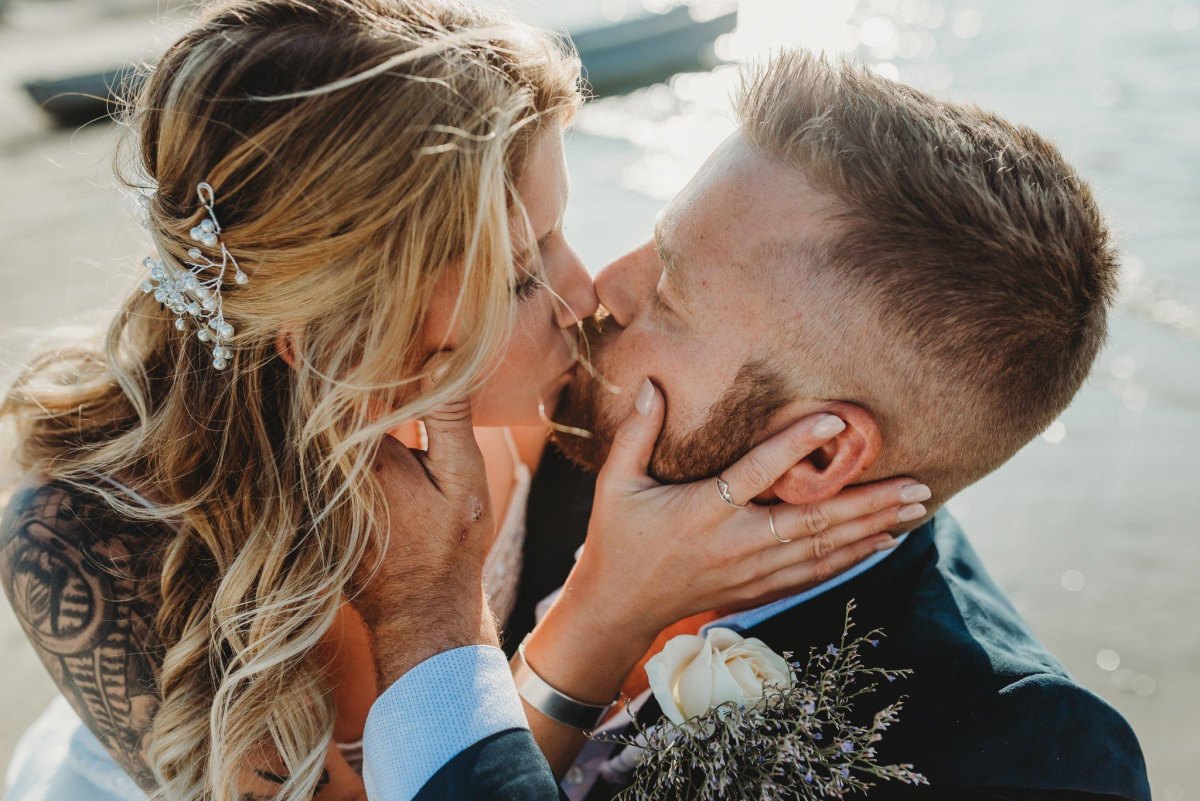
The peaceful walking pose closes the collection with simplicity. Looking ahead together creates a sense of partnership and possibility.
It is an adaptable choice for nearly any elopement style.
The strongest elopement images are created when direction feels effortless. These poses provide a foundation, but the couple’s own connection is what makes each photograph memorable.
Your Questions, Answered
How many poses should an elopement photographer plan?
A flexible collection of around twenty pose ideas gives variety while leaving room for spontaneous moments.
How can couples look natural in elopement photos?
Focus on interaction, movement, and genuine connection instead of holding a fixed expression.
Which elopement poses work outdoors?
Walking, embracing, dancing, silhouette, and scenic portraits adapt well to outdoor locations.
More Pinterest Visuals